
The Ultimate SAT Math Cheat Sheet
Master every essential formula and concept for the SAT Math section. This comprehensive guide from CurioLearn covers all the formulas provided in the reference information, plus key strategies and common mistakes to avoid.
Essential area, volume, and geometric relationship formulas
Polynomials, exponents, and function transformations
Proven strategies and common mistakes to avoid
These formulas are provided in the reference information at the beginning of each SAT math section
Basic Shapes
Circle
Area: A = πr²
Circumference: C = 2πr

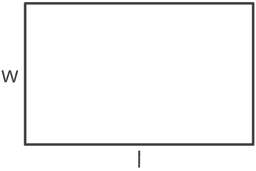
Rectangle
Area: A = lw
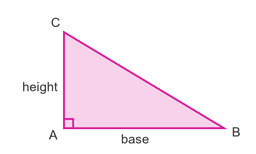
Triangle
Area: A = ½bh
Pythagorean Theorem
Formula: a² + b² = c²

Special Right Triangles
30-60-90 Triangle
If the short leg = 1, then:
- • Short leg = 1
- • Long leg = √3
- • Hypotenuse = 2

45-45-90 Triangle
If the legs = 1, then:
- • Legs = 1
- • Hypotenuse = √2

Volume Formulas
Rectangular Prism
Volume: V = lwh
Cylinder
Volume: V = πr²h
Sphere
Volume: V = (4/3)πr³
Cone
Volume: V = (1/3)πr²h
Pyramid
Volume: V = (1/3)lwh
Basic Conversions
Fraction: part/whole
Percent: (part/whole) × 100
Percent Change
Formula: ((new - old)/old) × 100%
Increase by Percent
Multiply by: (1 + r)
where r is the percent in decimal form
Decrease by Percent
Multiply by: (1 - r)
where r is the percent in decimal form
Interest Formulas
Simple Interest
A = P(1 + rt)
A = final amount, P = principal, r = rate, t = time
Compound Interest (Annual)
A = P(1 + r)ᵗ
Compounded once per year
Compound Interest (n times/year)
A = P(1 + r/n)ⁿᵗ
Compounded n times per year
Conversion Factor
General form: ending units/starting units
Example: (12 inches/1 foot) × 10 feet = 120 inches
Distance Formula
Distance = Rate × Time
Mixture Problems
Concentration A × Volume A + Concentration B × Volume B = Final Concentration × (Volume A + Volume B)
Exponent Rules
- • Multiplication: aᵇ × aᶜ = aᵇ⁺ᶜ
- • Division: aᵇ/aᶜ = aᵇ⁻ᶜ
- • Power: (aᵇ)ᶜ = aᵇᶜ
- • Negative: a⁻ᵇ = 1/aᵇ
- • Fractional: aᵇ/ᶜ = ᶜ√(aᵇ)
Imaginary Numbers
- • i² = -1
- • i³ = -i
- • i⁴ = 1
- • Pattern repeats every 4 powers
Parabolas
Standard Form
f(x) = ax² + bx + c
Vertex: (-b/2a, f(-b/2a))
y-intercept: c
Factored Form
f(x) = a(x - m)(x - n)
x-intercepts: m and n
Vertex Form
f(x) = a(x - h)² + k
Vertex: (h, k)
Special Factoring Patterns
Difference of Squares
a² - b² = (a + b)(a - b)
Perfect Square Trinomial
a² + 2ab + b² = (a + b)²
a² - 2ab + b² = (a - b)²
Slope Formula
m = (y₂ - y₁)/(x₂ - x₁)
Horizontal line: m = 0
Vertical line: m = undefined
Line Forms
- • Standard: Ax + By = C
- • Slope-Intercept: y = mx + b
- • Point-Slope: y - y₁ = m(x - x₁)
Distance & Midpoint
Distance: d = √[(x₂-x₁)² + (y₂-y₁)²]
Midpoint: M = ((x₁+x₂)/2, (y₁+y₂)/2)
Parallel & Perpendicular
- • Parallel: equal slopes
- • Perpendicular: opposite reciprocal slopes
Average (Mean)
Average = sum of items/number of items
Median
Median = middle number
(when numbers are in order)
Range
Range = maximum - minimum
Probability
Probability = desired outcomes/possible outcomes
Angle Relationships
- • Vertical angles: are congruent (equal)
- • Linear pair: supplementary (add to 180°)
- • Circle angles: add to 360°
Parallel Lines
When parallel lines are cut by a transversal:
- • All acute angles are congruent
- • All obtuse angles are congruent
Triangle Properties
- • Sum of angles: 180°
- • Exterior angle: equals sum of two remote interior angles
Pythagorean Triples
- • 3-4-5: 3² + 4² = 5²
- • 5-12-13: 5² + 12² = 13²
- • Any multiple of these ratios
Circle Properties
- • Radius and tangent: make a right angle
- • Central angle: double the inscribed angle
Arc and Sector
Arc length: (x/360) × circumference
Sector area: (x/360) × area of circle
where x = central angle
Circle Equation
(x - h)² + (y - k)² = r²
where (h, k) is the center and r is the radius
Trapezoid
Area = ½(b₁ + b₂)h
where b₁ and b₂ are the parallel sides
Regular Polygon
- • Sum of interior angles: 180(n - 2)
- • Sum of exterior angles: 360°
- • One interior angle: 180(n - 2)/n
where n = number of sides
Parallelogram Properties
- 1. Opposite sides are parallel and congruent
- 2. Opposite angles are congruent
- 3. Consecutive angles are supplementary
- 4. Each diagonal forms a pair of congruent triangles
- 5. Diagonals bisect each other
- 6. Area = base × height
• If diagonals are congruent → rectangle
• If diagonals are perpendicular → rhombus
Basic Trig Ratios
- • sin θ = opposite/hypotenuse
- • cos θ = adjacent/hypotenuse
- • tan θ = opposite/adjacent
Angle Conversions
360° = 2π radians
sin(x) = cos(90° - x)
The sine of an angle equals the cosine of its complement
Common Parent Functions
- • y = x: Linear
- • y = x²: Quadratic
- • y = x³: Cubic
- • y = √x: Square root
- • y = |x|: Absolute value
- • y = aˣ: Exponential
Transformations
- • f(x) + k: Shift up by k units
- • f(x) - k: Shift down by k units
- • f(x + h): Shift left by h units
- • f(x - h): Shift right by h units
- • -f(x): Reflect over x-axis
- • cf(x): Stretch vertically by c
- • f(x)/c: Shrink vertically by c
Key Strategies
Visual Problem Solving
- • Draw graphs for intersection point questions
- • Draw diagrams for geometry/trigonometry
- • Diagrams don't need to be precise, just general
Answer Checking
- • Plug in numbers to verify answers
- • Use substitution/elimination for systems
- • Try factoring vs. quadratic formula
Reading & Time Management
- • Read the entire question carefully
- • Redo questions instead of just reviewing
- • Use alternative solving methods
Function Recognition
- • Linear: constant rate of change
- • Exponential: increasing/decreasing rates
Common Mistakes to Avoid
Calculation Errors
- • Using wrong lengths for sine/cosine
- • Reading “3 large and 4 small” as “4 large and 3 small”
- • Not dividing by 3 when needed
- • Basic operation carelessness
Problem-Solving Errors
- • Not reading the entire question
- • Missing key information
- • Rushing through calculations
Answer Checking Method
Example: If you get x = 2 and y = 3, plug them back into the original equations to verify.
For expression simplification: Set variables to specific values and ensure both expressions give the same result.
Example: For 12xy - 12xy² - 24y, if you chose 12y(x - xy - 2), setting x = 3 and y = 2 should give -120 for both expressions.
Master SAT Math with CurioLearn
Ready to put these formulas and strategies into practice? Join thousands of students who have improved their SAT Math scores with CurioLearn's comprehensive study materials and practice tests.